
CENTENNIAL SQUARE CONSULTATION
FRIENDS OF VICTORIA
Centennial Square
Rejuvenation & Revitalisation
PUBLIC CONSULTATION DOCUMENT
Honouring the Past · Enriching the Present · Inspiring the Future
Friends of Centennial Square | Victoria, British Columbia 2026
This document is intended to stimulate broad public discussion. Your input will shape the future of Victoria’s most beloved civic space. friendsofcentennialsquare@gmail.com
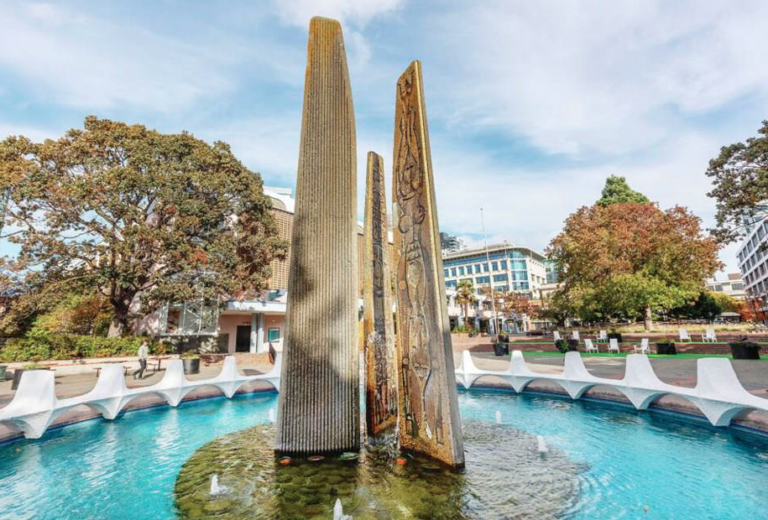
TABLE OF CONTENTS
Executive Summary
Appendix A — Glossary of Heritage Terms
Full transparency: this document drew on an archive of online e-mail discussions and comments gathered by C. Gower and M. Segger over the past year. It was assembled with the assistance of a series of AI tools, including Claude and Co-Pilot, with digital editing assistance by Grammarly.
EXECUTIVE SUMMARY
Centennial Square is the civic heart of Victoria, British Columbia — a heritage jewel occupying one of the most historically significant blocks in the city centre. Created in the early 1960s as part of Victoria’s centennial celebrations, it introduced to the Pacific Northwest a bold new concept: a purpose-built urban pedestrian plaza where citizens could gather, rest, and be inspired, free from the pressures of commerce and traffic.
This consultation document has been prepared to invite the community of Victoria — residents, businesses, visitors, artists, students, and all who love this city — to participate in a thoughtful conversation about the Square’s future. The central proposition is simple: Centennial Square is too important to be left to incremental neglect, but equally too precious to be transformed beyond recognition.
The rejuvenation strategy presented here rests on a foundation of heritage preservation. The magnificent Victoria City Hall (1878), the McPherson Playhouse (1914), the iconic Centennial Fountain (1966), and the great Sequoia tree that anchors the northeast corner are irreplaceable assets. They will be preserved, restored, and celebrated.
Within that framework, the Square can be carefully animated: with new LED lighting that brings the fountain alive after dark; with year-round programming in the arts, music and culinary culture; with new seating, planting, and microclimate improvements that make the space genuinely welcoming to all ages and backgrounds; and, potentially, with a new public library and art gallery on the northeast side of the Square that would serve Victoria for generations.
This document does not present finished plans. It presents a vision and asks for your response. Please read it, discuss it with friends and neighbours, and make your views known through the consultation process described in Section 14.
SECTION 1 | A MESSAGE FROM THE FRIENDS
Centennial Square was a gift from one generation of Victorians to the next. Our task today is not merely to maintain that gift, but to add our own layer of care, creativity, and generosity — so that the Square remains a source of civic pride for the generations who will inherit it from us.
Dear Fellow Victorians,
When we walk through Centennial Square on a summer afternoon — past the cooling mist of the fountain, under the shade of the old Sequoia, with the copper-green clock tower of City Hall rising above — We feel a deep sense of place. This is our city at its best: human in scale, rich in history, open to everyone.
But we also see a space that, in recent years, has not always fulfilled its extraordinary potential. The fountain, a masterpiece of 1960s civic sculpture, is often underlit and overlooked. The edges of the Square can feel uninviting, particularly in the evenings. The northeastern quadrant, anchored by the beloved Sequoia, lacks the activation needed to draw people in. And the Square’s relationship with the wider city centre — its shops, restaurants, theatres, and cultural venues — could be so much richer than it is today.
This consultation document is the beginning of a public conversation about how we rejuvenate Centennial Square for the twenty-first century while honouring everything that makes it unique. It is a conversation about heritage and innovation; about the past and the future; about what kind of city Victoria wants to be.
We invite every resident to read these pages, to visit the Square with fresh eyes, and to tell us what you think. The City of Victoria will listen carefully, and your voices will shape what we do next.
Yours sincerely,
The Friends of Centennial Square
SECTION 2 | INTRODUCTION — WHY CENTENNIAL SQUARE MATTERS
Centennial Square occupies a special place not only in the geography of Victoria but in the collective memory of its citizens. Few urban spaces in Canada carry such a concentrated weight of civic meaning within so compact an area. At its heart — literally and figuratively — stands the Victoria City Hall, one of the finest examples of Second Empire civic architecture in the country. Around it are gathered a theatre of national cultural significance, one of the oldest and grandest trees in any Canadian city centre, and a fountain that remains, more than half a century after its creation, a genuinely remarkable work of public art.
To understand why Centennial Square matters so much, it is necessary to understand both what it is and what it represents.
What Centennial Square Is
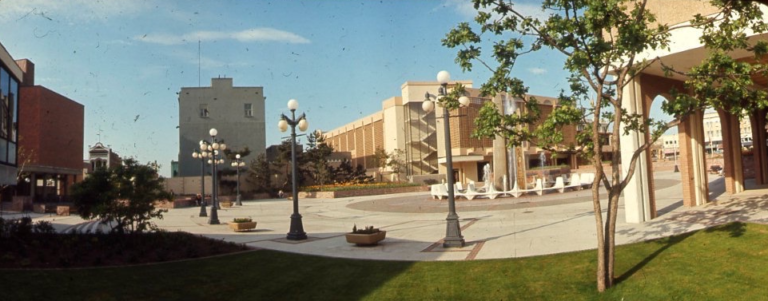
Centennial Square is a pedestrianized public plaza located in the heart of Victoria’s historic city centre, bounded by Douglas Street to the east, Pandora Avenue to the south, Government Street to the west, and Fisgard Street to the south. Approximately 0.7 hectares in extent, the Square is modest in size by the standards of European civic piazzas, but this modesty is part of its charm: it feels intimate, human, and sheltered rather than grandiose and exposed.
The Square was created between 1962 and 1966 as the centrepiece of Victoria’s centennial celebrations, marking 100 years since the establishment of the Colony of British Columbia. The design brief given to the architects called for an urban space of genuine civic quality — not merely a landscaped car park or a pedestrianized shopping zone, but a true public room: a place of beauty, calm, and democratic dignity.
What Centennial Square Represents
Beyond its physical reality, Centennial Square represents a set of values that remain as important today as they were in 1966: the belief that public space matters; that beauty in the urban environment is not a luxury but a necessity; that citizens of all backgrounds deserve places of refuge, delight, and social encounter in the fabric of their daily lives.
In an era when many North American cities dismantled their historic centres in pursuit of modernisation, Victoria made a different choice. Rather than demolishing the old City Hall to build a new one, rather than replacing the ageing McPherson Playhouse with a contemporary venue, Victoria’s civic leaders of the 1960s chose to weave heritage and innovation together — to create something new that honoured what already existed. The result was Centennial Square: a space that belongs, simultaneously, to Victoria’s Victorian past and to the confident, forward-looking spirit of the 1960s.
That dual inheritance — heritage and modernity in creative dialogue — is precisely what this rejuvenation strategy seeks to honour and continue
KEY FACT
Centennial Square is one of the most visited and photographed public spaces in British Columbia. Its heritage assets are collectively valued at over $150 million in replacement terms. The Square’s cultural and economic contribution to the city centre is incalculable
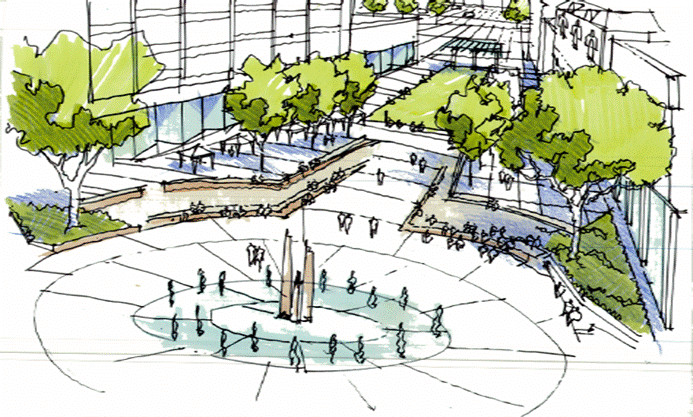
SECTION 3 | HISTORY AND HERITAGE — THE STORY OF THE SQUARE
The Victorian Era: City Hall and the McPherson
The story of Centennial Square begins long before the Square itself was conceived. The land on which it stands was at the centre of the young city of Victoria from the very beginning of the colonial era. By the time of Confederation, the block was already defined by two buildings that would outlast every subsequent change: the City Hall and what would later become the McPherson Playhouse.
Victoria City Hall was completed in 1878 to designs by John Teague, one of the most accomplished architects working on the Pacific Northwest frontier at that time. The building is a tour de force of Second Empire civic architecture — a French-derived style that swept across North America in the 1870s, expressing the ambitions of newly prosperous cities from Halifax to San Francisco to project themselves as genuinely metropolitan.
The McPherson Playhouse began its life in 1914 as the Pantages Theatre, part of the famous vaudeville circuit that stretched across the continent. Designed by B. Marcus Priteca, the house architect of the Pantages chain, the theatre was purpose-built for large-scale variety entertainment, with an auditorium seating over 1,500 people and a facade that announced, with theatrical confidence, the pleasures within. Renamed the McPherson Playhouse in honour of Victoria philanthropist Hamish McPherson, it has been continuously in use as a performing arts venue for over a century.
The 1960s: A New Vision for the City Centre
By the late 1950s, the block between these two heritage buildings was a miscellany of small commercial premises, service lanes, and surface parking — unremarkable in itself but occupying land of extraordinary civic potential. Victoria’s centennial celebrations, planned to take place in 1962–1966, provided both the occasion and the funding to transform it.
The project was championed by a visionary Victoria mayor of the day, Richard Wilson assisted by city planner Rod Clack, architects Alan Hodgson, John Wade, R. W. Siddall, C. Dexter Stockdill, John Di Castri, George Giles, artist Jack Wilkinson and landscape architect Clive Justice.
The decision to create a pedestrian plaza rather than a conventional civic building was, for its time, remarkably progressive. North American cities in this era were generally moving in the opposite direction: tearing up historic street patterns to accommodate the motor car, demolishing older buildings in the name of urban renewal, and treating public space as a residual by-product of development rather than as a primary urban amenity.
Victoria’s choice reflected the influence of contemporary European thinking about urban design — particularly the ideas then emerging from Scandinavia and the Netherlands about the human-scaled city and the importance of pedestrian life. The architects and planners charged with designing the Square were clearly aware of precedents such as the Stroget in Copenhagen (pedestrianised in 1962) and various Italian piazzas that were being rediscovered by urbanists as models for modern civic life.
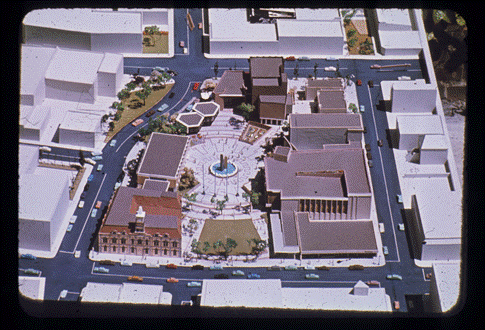
The Fountain and the Sequoia: Two Anchors
Two elements of the 1966 design have particular significance for any understanding of Centennial Square’s character: the Centennial Fountain and the Sequoia tree.
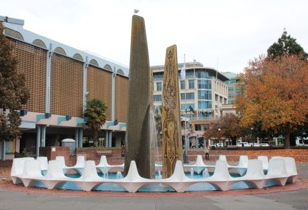
The Centennial Fountain was commissioned as the Square’s principal visual focus and symbolic centrepiece. Created in 1966 and representing one of the most ambitious works of public sculpture commissioned in British Columbia to that date, the Fountain is a bold, abstract composition — a series of interlocking monoliths decorated with Italian glass mosaics in a palette of reflective gold tiles from which water emerges in carefully choreographed patterns. In its combination of formal sculptural ambition with purely functional water engineering, it exemplifies the design confidence of the 1960s at its best.
The Sequoia — a Giant Sequoia (Sequoiadendron giganteum) planted in the northeast corner of the Square — was planted in the early 1980s. The tree now anchors the civic space to the natural world and to the passage of time, reminding citizens that the Square was part of a continuum that extended far beyond the brief lifespan of any architectural or political fashion.
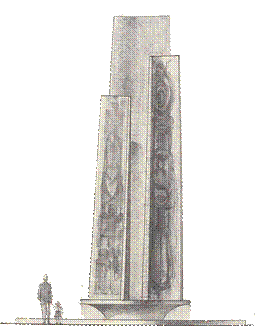
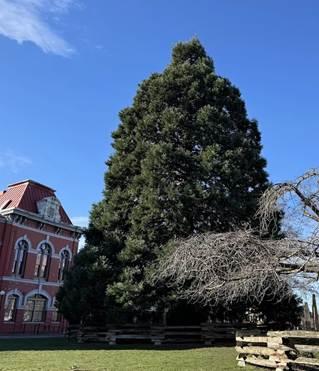
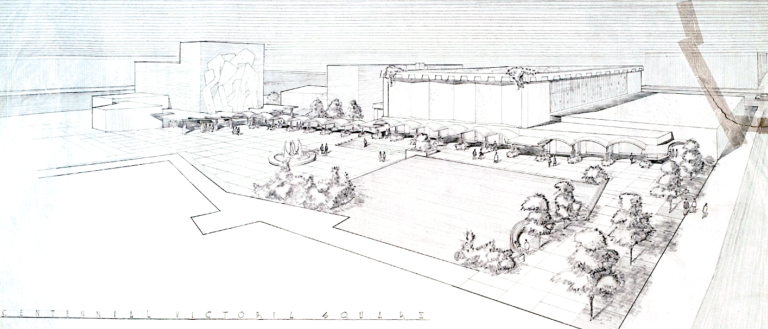
Early concept sketch for the fountain and the Sequoia today
Recent Decades: Gradual Decline and Growing Concern
From its opening in 1966 through the 1970s and into the 1980s, Centennial Square fulfilled its design brief admirably. It was the venue for civic celebrations, political demonstrations, street performances, farmers’ markets, and innumerable informal gatherings. Photographs from this period show a space alive with people of all ages, sitting at cafe tables, playing in the fountain spray, listening to buskers, reading on benches under the Sequoia.
From the late 1980s onward, however, the Square began to show signs of the decline that has affected many North American city centres. Retail activity shifted to suburban malls and, later, to online platforms. The evening economy contracted as office workers departed the downtown core. Investment in maintenance and programming was reduced. The result, by the early 2000s, was a Square that still retained all of its structural and heritage assets but had lost much of its vitality and sense of civic purpose.
SECTION 4 | HERITAGE ASSETS — WHAT WE MUST PRESERVE
The starting point for any discussion of Centennial Square’s future must be a clear-eyed appreciation of what the Square already contains. The following heritage assets are non-negotiable: they are the foundation upon which all rejuvenation work must be built, not obstacles to be overcome in pursuit of novelty.
Victoria City Hall (1878)
Designated a National Historic Site of Canada, Victoria City Hall is the anchor of Centennial Square and one of the finest Victorian civic buildings in the country. Designed by John Teague in the Second Empire style, the building features a distinctive mansard roof punctuated by ornate dormer windows, a projecting central pavilion with a monumental clock tower, and facades of carefully cut painted brick that have weathered over nearly 150 years.
The building continues to serve its original function as the seat of Victoria’s civic government — a fact that gives it a living significance that no museum piece can match. Rejuvenation of the Square must enhance and celebrate its relationship with City Hall, not diminish it.
Conservation priorities include: restoration of the mansard roof cresting; cleaning and selective repair of the red brick facades; improved accessibility at ground level; and enhanced exterior lighting to showcase the building’s remarkable architecture at night.
The McPherson Playhouse (1914)
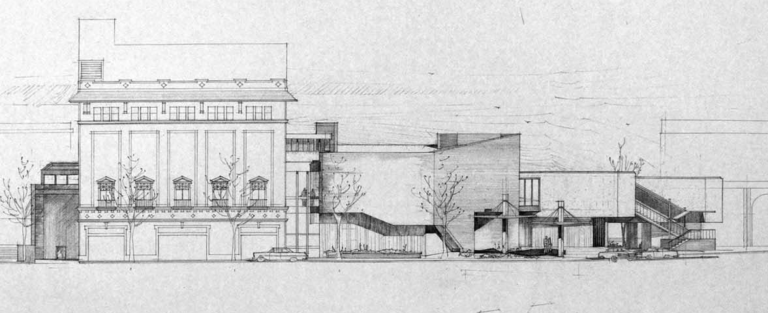
The McPherson Playhouse, designated a municipally significant heritage building, contributes to the Square’s character in a way that is architecturally and culturally distinct from City Hall. Where City Hall speaks of civic authority and permanence, the McPherson speaks of popular culture and entertainment — of the democratic pleasures of music, comedy, drama, and spectacle that have been enjoyed by Victorians for over a century.
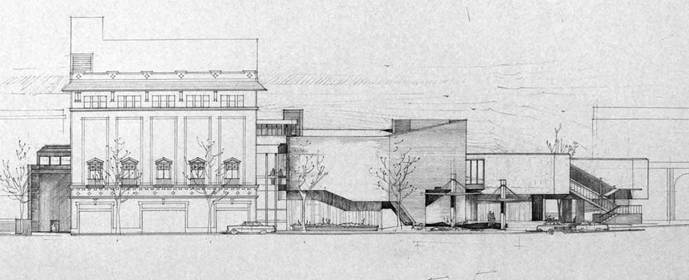
The building’s Beaux-Arts façade is complemented by the modernist but sensitive foyer addition which faces south on Pandora Avenue and creates one of the most theatrically compelling street elevations in Victoria. The foyer and mezzanine look out over the Square’s providing an evening nightscape that leverages the McPherson’s visual presence. —throngs of theatregoers gathering before shows provide a social animation that only a live performance venue generates.
Conservation priorities include: repair and enhancement of the terracotta facade; restoration of the historic Government Street marquee; improved circulation between the theatre entrance and the Square; and programming connections that encourage theatre audiences to engage with the wider square before and after performances, perhaps a bar or café opening into the Square.
The Centennial Fountain (1966)
The Centennial Fountain is the Square’s most important twentieth-century heritage asset — and, arguably, its most underappreciated one. Created in 1966 as the Square’s symbolic centrepiece, the Fountain is a major work of public sculpture that deserves recognition alongside the great fountain commissions of the post-war period in Britain, Scandinavia, and North America.
The Fountain’s structure — a composition of interlocking horizontal planes and vertical jets from which water emerges in carefully calibrated patterns — represents a confident synthesis of sculptural abstraction and hydraulic engineering that was highly sophisticated for its time. In recent years, however, the Fountain has suffered from inadequate maintenance, outdated mechanical systems, and poor lighting that renders it nearly invisible after dark.
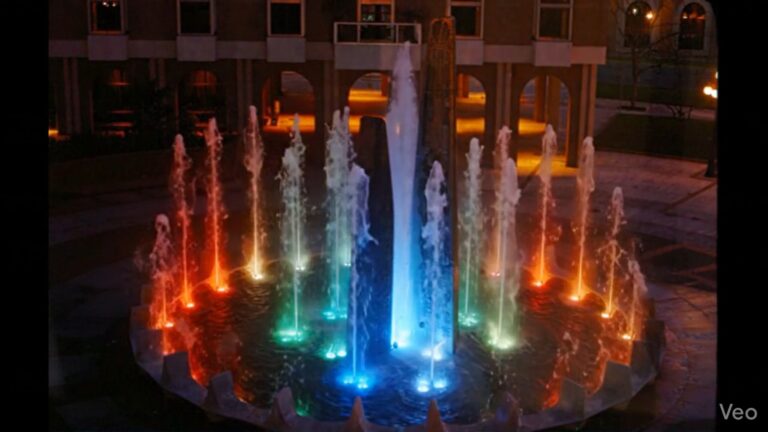
Restoring the Fountain to full working order — and animating it with a new state-of-the-art LED lighting installation that can create dynamic colour programmes responding to seasons, events, and community celebrations — is one of the single most transformative and cost-effective interventions available to the rejuvenation project.
The First Nations Spirit Square
Spirit Square, which signals the legacy of the Lekwungen people, was added in 2008 to the west of City Hall. Two spirit poles and a water feature are dominant features and indicate we are hosted on the traditional territories of the Songhees and Esquimalt people, and that our Aboriginal history and culture have shaped the region and the province.”
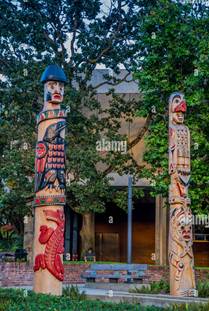
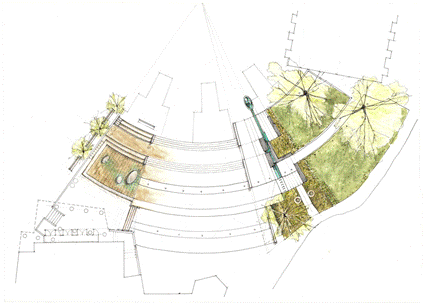
Spirit totems for the Spirit Square and concept sketch for overall plan.
The Giant Sequoia Tree
The Giant Sequoia (Sequoiadendron giganteum) in the northeast corner of the Square is perhaps the most irreplaceable of all the Square’s assets. Planted in the early 1980s, it is now a mature specimen of one of the world’s largest tree species. Its massive columnar trunk, dense canopy, and extraordinary scale provide the Square with a sense of timelessness and natural grandeur that no architectural feature could replicate.
The tree serves multiple functions simultaneously: as a visual landmark visible from across the city centre; as a microclimate moderator that provides shade, humidity, and wind protection; as a habitat for urban wildlife; and as a living symbol of longevity, resilience, and the importance of the natural world within the urban environment.
The tree’s health and long-term welfare must be a primary constraint on any development in the northeast quadrant of the Square. Any new construction, change to surface drainage, or modification of ground levels in the vicinity of the Sequoia must be subject to specialist arboricultural assessment and must prioritise the tree’s survival and flourishing.
Heritage Asset | Designation / Significance |
Victoria City Hall (1878) | National Historic Site of Canada; Municipal Heritage Designation |
McPherson Playhouse (1914) | Municipal Heritage Designation; Provincial recognition |
Centennial Fountain (1966) | Municipally significant; 20th century heritage asset |
Giant Sequoia Tree | Significant natural heritage; Protected under City tree bylaw |
Paving and Street Furniture | Contributing elements; 1960s civic design character |
Views and Sight Lines | Heritage view corridors to City Hall clock tower protected |
SECTION 5 | THE 1960s DESIGN VISION — AN OASIS IN THE CITY
To understand what Centennial Square should become, it is essential to understand what it was originally conceived to be. The design philosophy of the 1960s Square was not accidental: it reflected a coherent and sophisticated urban design vision that remains valid, indeed increasingly relevant, today.
The Oasis Concept
The central design concept can be expressed in a single phrase that appears repeatedly in the planning documents of the early 1960s: an oasis of refuge and relaxation in the centre of a busy city. This was not merely poetic language. It encoded a specific set of design decisions about the Square’s relationship with its urban context.
An oasis, by definition, is a place that is different from its surroundings. It offers respite from the heat, noise, and pressure of the environment around it. It is sheltered. It has water. It has vegetation. It is calm. These qualities were deliberately designed into Centennial Square: the pedestrianised surface that excludes motor traffic; the fountain that introduces the sound and movement of water; the tree canopy that provides shade and coolness; the inward-facing arrangement of buildings and edges that creates a sense of enclosure and shelter.
This oasis concept must remain the organising principle of the rejuvenated Square. Every proposed intervention — new uses, new programming, new infrastructure — must be tested against this principle. Does it contribute to the experience of the Square as a place of refuge and delight? Or does it introduce the noise, pressure, and commercial urgency of the surrounding city in ways that undermine the Square’s distinctive character?
The Social Contract of Public Space
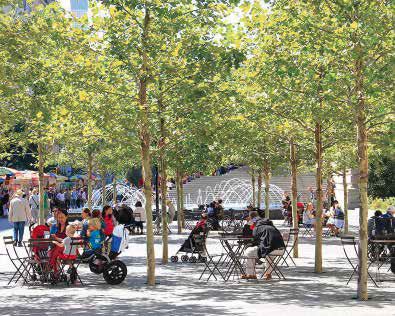
The 1960s designers understood something that has sometimes been forgotten in subsequent decades of privatisation and commercialisation: that truly public space — space that is freely accessible to everyone, that imposes no obligation to consume, that accommodates the full range of human activity from quiet contemplation to boisterous celebration — performs a social function that no private space, however well designed, can replicate.
Centennial Square was, and must remain, a genuinely public place. This means resisting the temptation to fill every corner with commercial activity. It means ensuring that the majority of seating remains free and unconditional — available to anyone who wishes to sit, regardless of whether they have bought a coffee or a meal. It means maintaining the open central space that allows impromptu gatherings, performances, and community celebrations to take place without prior booking or commercial negotiation
Scale and Proportion
One of the most admired qualities of Centennial Square is its scale. The Square is neither so large that it feels exposed and impersonal, nor so small that it feels cramped. The height-to-width ratio of the enclosed space — determined by the surrounding buildings — creates an outdoor room that feels comfortable and sheltering rather than overwhelming.
Any new construction on or around the Square must be carefully calibrated to respect this existing scale. Buildings that are too tall, too bulky, or too assertive in their architectural language risk destroying the sense of enclosure and intimacy that is one of the Square’s most valuable qualities. The northeast corner, where a new library and/or art gallery is proposed, requires particularly careful design to ensure that any new building enhances rather than disrupts the Square’s spatial character.
DESIGN PRINCIPLE
The 1960s oasis concept — a place of refuge, beauty, and democratic openness in the heart of the city — is not a historical curiosity but a living design ideal that this rejuvenation strategy commits to preserve and strengthen. Every design decision will be tested against this principle.
SECTION 6 | CURRENT CHALLENGES AND OPPORTUNITIES
An honest assessment of Centennial Square’s current condition reveals both significant challenges and significant opportunities. Addressing the challenges without sacrificing the opportunities — and vice versa — requires the kind of balanced, nuanced approach that this consultation document advocates.
Current Challenges
Safety and perception of safety: Centennial Square has, in recent years, experienced problems associated with social disorder that have made some residents and visitors reluctant to use the space, particularly at night and in the early morning. This is not a problem unique to Centennial Square — it reflects broader pressures on city centres across British Columbia and North America — but it is a problem that must be addressed directly, through a combination of design improvements, programming, and social services, rather than ignored or displaced.
Maintenance and condition: Decades of deferred maintenance have taken a toll on the Square’s physical fabric. The fountain mechanical systems require major overhaul. The paving is uneven and difficult to navigate for people with disabilities. Some of the 1960s street furniture is beyond repair and has been removed without replacement. The tree canopy, while still magnificent, requires specialist arboricultural care.
Evening activation: The Square’s daytime vitality is significantly better than its evening character. Without a restaurant, bar, or other use that attracts people after dark — and without the fountain lighting and event programming that would make the space inviting in the evening hours — Centennial Square effectively closes at around 5:30pm on most days. This represents an enormous missed opportunity.
Disconnection from contemporary culture: Some members of the community, particularly younger residents, feel that Centennial Square does not speak to them — that its programming, its aesthetic, and its atmosphere are oriented toward an older demographic and do not reflect the diversity, creativity, and energy of contemporary Victoria.
Current Opportunities
The heritage assets are intact: Despite the challenges described above, the Square’s fundamental heritage assets — City Hall, the McPherson, the Fountain, the Sequoia — remain in place and largely in good condition. This is the most important fact about Centennial Square’s current situation. Everything else can be improved; the assets themselves cannot be replaced.
Growing appetite for public life: The experience of the COVID-19 pandemic profoundly reinforced public appreciation for outdoor public space. Across Victoria, and across Canada, there is a demonstrable and growing appetite for high-quality urban outdoor space for gathering, recreation, and cultural activity. Centennial Square is perfectly positioned to meet this demand.
Cultural programming capacity: Victoria has a rich and growing arts and cultural sector, including dozens of performing arts companies, visual arts organisations, food and beverage entrepreneurs, and community groups who are actively seeking high-quality public venues. The rejuvenated Square could become the primary outdoor cultural venue for the city.
Regional significance: Victoria is not merely a local city but a destination of national and international significance, receiving millions of visitors annually. A rejuvenated Centennial Square — better known, better programmed, more beautiful, and more welcoming — would strengthen Victoria’s position as one of Canada’s great urban destinations.
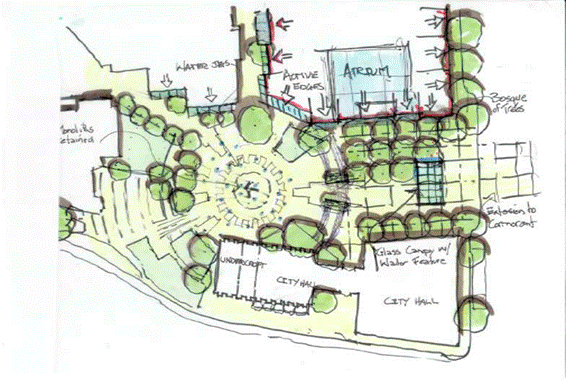
SECTION 7 | THE REJUVENATION FRAMEWORK — SEVEN GUIDING PRINCIPLES
The rejuvenation strategy for Centennial Square is built on seven guiding principles. These principles are not a checklist to be ticked off but a set of values to be held simultaneously and in creative tension with one another. Every design decision, every programming choice, every investment priority must be tested against all seven principles, not just one.
Principle 1: Heritage First
The preservation, restoration, and celebration of Centennial Square’s heritage assets — City Hall, the McPherson Playhouse, the Centennial Fountain, and the Sequoia tree — is the non-negotiable foundation of the rejuvenation strategy. Heritage assets are irreplaceable. New uses, new programming, and new buildings are welcome additions; they must never come at the cost of the heritage fabric that makes the Square unique.
Principle 2: The Oasis Preserved
The 1960s design concept of an oasis of refuge and relaxation in the heart of the city will be preserved and strengthened. The rejuvenated Square will remain a pedestrianized, publicly accessible space where the primary design priority is human wellbeing and comfort. The more recent Spirit Garden reinforces this value, adding the notions of respect, remembrance, and learning. Rejuvenation efforts must engage Indigenous voices while protecting its contemplative character.
The introduction of new commercial uses and programming will be carefully managed to ensure that the Square retains its character as a place of democratic openness, not a privatized consumption zone.
Principle 3: Inclusive and Welcoming
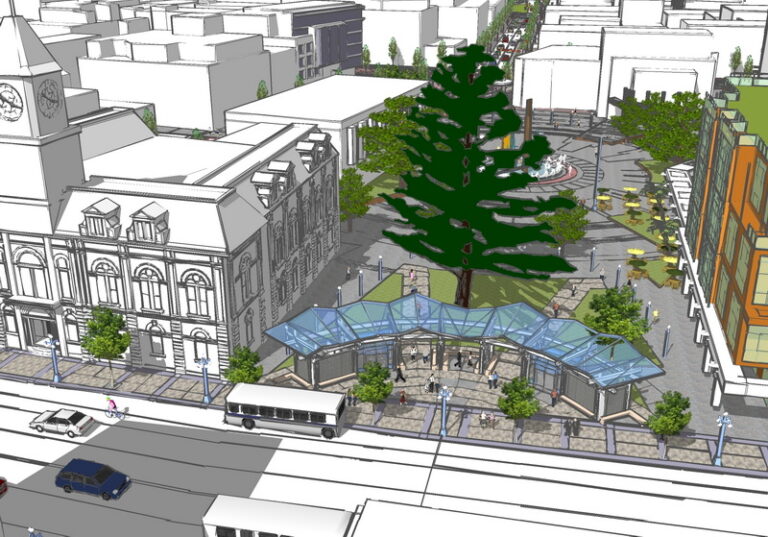
The rejuvenated Square will be genuinely welcoming to all members of the Victoria community, regardless of age, background, ethnicity, ability, or economic status. This means designing for universal accessibility; ensuring that a substantial proportion of seating remains free and unconditional; programming events that appeal to diverse audiences; and actively addressing the safety and social issues that have made some community members feel unwelcome. Improved public washroom facilities, perhaps incorporated into a bus shelter, would facilitate inter-generational use of the square.
Principle 4: Activated and Alive
A beautiful but empty public space is a failure. The rejuvenated Square must be genuinely alive — animated by people, by programming, by the sight and sound of the fountain, by the movement of light through the tree canopy. This means investing in both physical infrastructure (the lighting, the seating, the planting, the fountain systems) and in the programming capacity (event management, cultural partnerships, food and beverage licensing) that will keep the Square active seven days a week, from early morning to late evening, throughout the year.
Principle 5: Intergenerational
Centennial Square belongs to all generations, but in recent years it has been perceived as oriented primarily toward older visitors. The rejuvenated Square will actively and visibly welcome younger Victorians — not by abandoning the values of heritage and civic dignity that make the space meaningful, but by ensuring that programming, aesthetic choices, and social atmosphere are genuinely appealing and accessible to people of all ages. The best public spaces in the world succeed precisely because they attract a cross-section of humanity: young and old, local and visitor, individual and group.
Principle 6: Sustainable and Resilient
The rejuvenation strategy will embed principles of environmental sustainability and climate resilience throughout. This means specifying restoration materials with low embodied carbon; designing new planting strategies that increase the Square’s tree canopy, improve its microclimate, and support biodiversity; upgrading the fountain’s mechanical systems to dramatically reduce water consumption; and specifying LED lighting with the lowest possible energy consumption consistent with the quality of illumination required.
Principle 7: Phased and Affordable
Centennial Square’s rejuvenation will be a long-term project, not a single event. The strategy presented in this document is conceived in phases, each of which delivers tangible improvements and can be funded within realistic municipal budget parameters. Early phases will focus on the improvements of greatest impact and best value — fountain restoration, lighting enhancement, accessibility improvements, and programming investment — before moving to the larger capital investments of the library/gallery development.
These seven principles are offered for public discussion. The community consultation process will ask you whether you agree with these principles, whether anything is missing, and whether the balance between them feels right. Your responses will shape the final strategy document.
SECTION 8 | THE CENTENNIAL FOUNTAIN — ANIMATED WITH LIGHT
Of all the interventions proposed in this rejuvenation strategy, none offers greater potential impact relative to cost than the restoration and lighting enhancement of the Centennial Fountain. A fully restored and dynamically lit fountain would transform the Square’s character after dark, provide a year-round focal point for civic celebration, and give Centennial Square a visual identity that could genuinely attract visitors from across the region and beyond.
The Case for the Fountain
Great urban fountains are among the most powerful tools available to civic designers. They introduce the sight, sound, and sensory presence of water into the urban environment; they create focal points that organise spatial experience; they provide acoustic screening that reduces the perceived impact of traffic noise; and they generate the kind of informal social interaction — people gathering to watch, children playing at the water’s edge — that makes public spaces come alive.
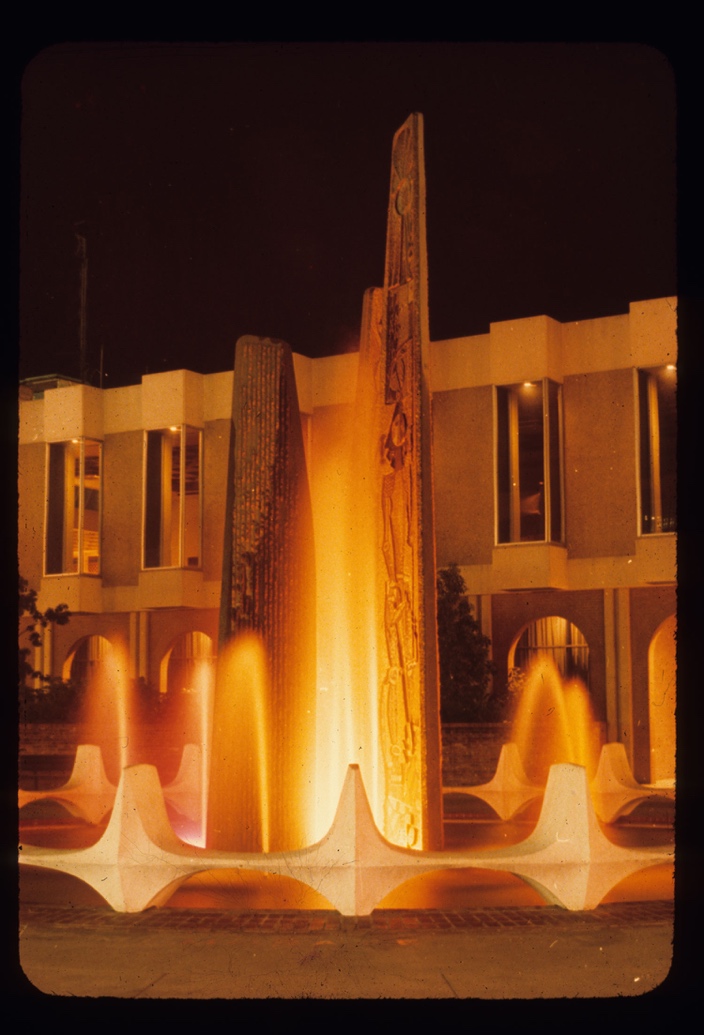
The Centennial Fountain, with its three dominant pilons, already possesses the sculptural quality and spatial authority that most cities would envy. What it needs is not replacement but restoration of the mosaics — and the addition of a contemporary lighting installation that can reveal its qualities after dark.
The Centennial Fountain is a work of art. The sculptural monoliths featuring Italian art glass mosaics are framed by the white precast concrete tiara. Originally, the tiara surfaces were smooth, inviting visitors to sit, to watch the fountain spray and to listen to the sounds of water. In 1970, these surfaces were coated with a rough stucco finish thus redefining how the fountain related to a visitor. Initial restoration works should have this stucco coating removed.
A further enhancement could include a nearby interpretation panel, telling of how the Fountain was constructed and the meanings behind the glass mosaics.
The Proposed LED Lighting Installation
The proposed lighting installation would use state-of-the-art RGB LED technology to create dynamic, programmable light programmes that can respond to seasons, civic events, and community celebrations. The installation would be fully integrated with the fountain’s mechanical systems, allowing light and water movement to be choreographed in combination.
The lighting design would be developed in close consultation with the fountain’s heritage significance, ensuring that the light installation enhances rather than obscures the sculptural qualities of the original work. The default programme — used on ordinary evenings throughout the year — would be calm, warm, and understated, drawing attention to the fountain’s form and the movement of water without theatrical excess.
Special programmes could be created for specific occasions: warm golden light for Canada Day and civic celebrations; blue and green programmes for environmental awareness events; white and silver for winter evenings; and bespoke commissions for arts festivals and major community events.
Mechanical Restoration
The fountain’s current mechanical systems — pumps, filters, water treatment, and distribution — date from a series of partial upgrades over the past thirty years and are no longer adequate for reliable, year-round operation. A complete mechanical overhaul is required, including the installation of new variable-speed pumps that can create the variable flow rates needed for dynamic water displays; a modern water treatment system that dramatically reduces chemical consumption; and upgraded electrical infrastructure to support the new LED lighting installation.
The mechanical restoration would also include a programme of structural conservation work on the fountain’s Italian glass mosaic elements, undertaken by specialist conservators with experience in the treatment of 1960s public sculpture.
ESTIMATED IMPACT
Comparable fountain restoration and lighting projects in Canadian cities — including the restoration of the International Fountain in Vancouver and the Nathan Phillips Square fountain in Toronto — have demonstrated that a well-executed fountain revival can increase evening footfall in the surrounding area by 40–60% and generate significant media and tourism interest. A revitalised Centennial Fountain would become one of Victoria’s most photographed landmarks.
SECTION 9 | PROGRAMMING THE SQUARE — ARTS, CULTURE & DINING
Physical improvements to Centennial Square, however excellent, will not by themselves create the vibrant civic life that the Square deserves. Programming — the events, activities, performances, markets, and social uses that fill the space with people and purpose — is equally important. Indeed, the most successful urban public spaces in the world are as much programmes as they are places.
A Year-Round Programming Strategy
The rejuvenation strategy proposes a comprehensive, year-round programming strategy for Centennial Square, developed in partnership with Victoria’s arts, cultural, and hospitality sectors. The strategy would be anchored by four seasonal festivals, each lasting two to three weeks, that would establish Centennial Square as Victoria’s primary outdoor cultural venue: a spring arts festival in April, a summer music festival in July and August, a harvest food and drink festival in October, and a winter light festival in December.
Between these anchor festivals, the Square would be activated by a programme of regular weekly events: outdoor cinema on summer Friday evenings; a weekly artisans’ market on Saturdays; Sunday morning yoga and tai chi sessions; lunchtime concerts and performances on weekday middays; and a standing invitation for buskers, street performers, and spontaneous cultural expression throughout the year.
One of the most effective mechanisms for activating public space, particularly in the evening and on weekends, is the introduction of high-quality food and beverage uses at the Square’s edges. The rejuvenation strategy proposes the introduction of two to three permanent restaurant and cafe concessions on the Square’s southern and western edges, in low-impact pavilion structures designed to complement the existing heritage context.
These concessions would be selected through a competitive process that prioritises quality, local ownership, sustainability credentials, and programming contribution. Operators would be expected not merely to trade from their concessions but to actively contribute to the Square’s animation — through extended terraces during summer events, special menus for festival occasions, and collaboration with the Square’s programming partners.
The emphasis would be firmly on food and cafe culture rather than on alcohol-led entertainment. The Square’s character as a family-friendly, inclusive civic space must be preserved. Late-night licensed premises would not be appropriate in this context.
Victoria has a particularly rich concentration of performing arts, visual arts, and cultural organisations within walking distance of Centennial Square. The rejuvenation strategy would establish a formal programming partnership with key organisations including the Victoria Symphony, First Nations celebrations, the Victoria Film Festival, the Art Gallery of Greater Victoria, the Victoria International Jazz Fest, the Rifflandia Festival, and the McPherson Playhouse itself.
This partnership would create a shared calendar for the Square, reducing the risk of conflicts and missed opportunities, and enabling collaborative marketing that positions Centennial Square as the hub of Victoria’s cultural life. It would also create a mechanism for smaller and emerging arts organizations to access the Square’s facilities on a subsidized or in-kind basis, ensuring that the Square reflects the full diversity and vitality of Victoria’s cultural sector.
The programming strategy would include a specific commitment to engaging communities who have historically felt less welcome or less well represented in Centennial Square’s public life. This includes Indigenous communities, whose history and culture are inseparable from the land on which Victoria is built; newcomer communities; young people; and people experiencing homelessness or social marginalization. Programming that reflects and celebrates these communities is not only the right thing to do — it also makes the Square more interesting, more vibrant, and more genuinely representative of the city Victoria is becoming.
SECTION 10 | A NEW PUBLIC LIBRARY AND ART GALLERY
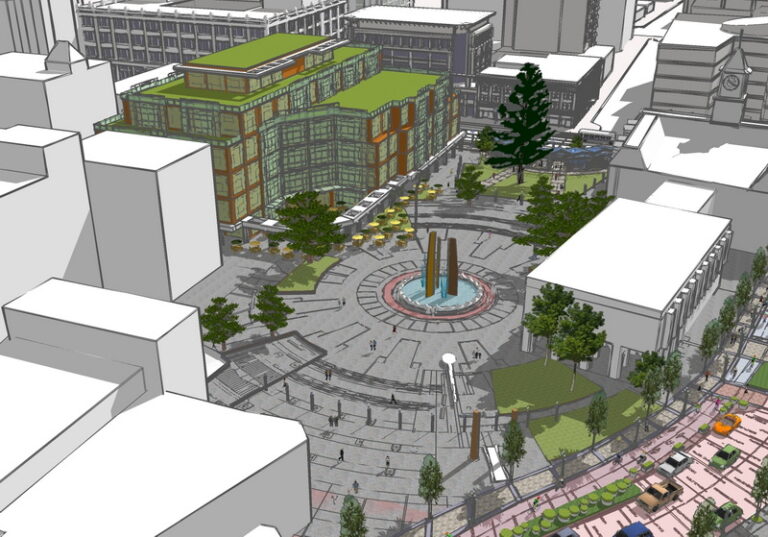
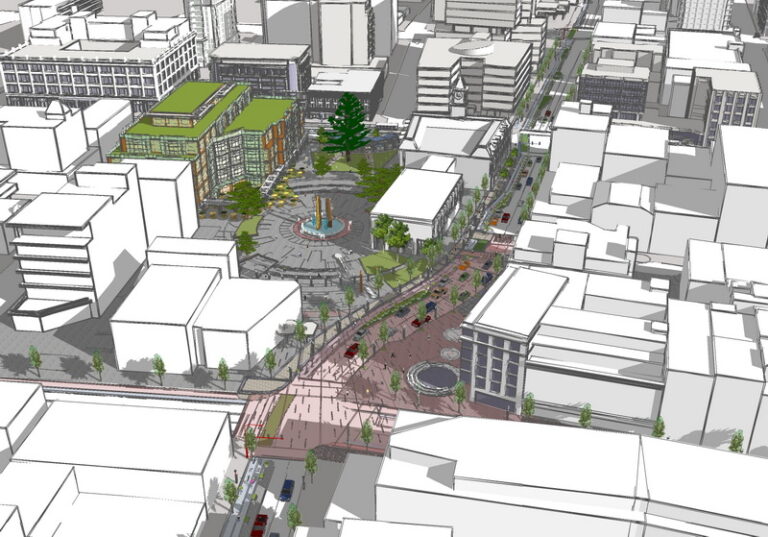
One of the most significant and potentially transformative proposals in this consultation document is the possible incorporation of a new public library, a new public art gallery, or a combined library-gallery facility into the northeast side of Centennial Square. This proposal reflects a recognition that the Square’s northeast quadrant — the area around and beneath the Sequoia tree — currently underperforms relative to its extraordinary potential.
Victoria’s existing public library branch in the downtown area is well loved but operates from facilities that are increasingly inadequate for the demands of a twenty-first-century library service. The main branch building, constructed in 1979, is showing its age and is not readily adaptable to the evolving expectations that citizens have of public libraries: as community centres, as digital hubs, as safe and welcoming spaces for people of all ages and backgrounds, and as partners in the city’s cultural and educational life.
Similarly, the Art Gallery of Greater Victoria, located on Moss Street to the east of the city centre, is a wonderful institution that is physically distant from the downtown core and the tourist economy. A downtown presence — particularly one embedded within Centennial Square — would dramatically increase the Gallery’s visibility, accessibility, and capacity to engage with the full range of the community.
The most exciting possibility is a building that brings together the library and gallery functions in a single, purpose-designed facility, serving as a new cultural anchor for Centennial Square and the wider city centre. Such combined facilities have been successfully created in many cities around the world — most notably in the Netherlands, Scandinavia, and Australia — and consistently demonstrate that combining library and gallery functions creates a richer, more varied, and more frequently visited public cultural institution than either could achieve alone.
In Victoria’s context, such a facility could include: a flagship public library branch with an enhanced children’s library, a digital learning centre, flexible community meeting rooms, and extended opening hours; a gallery of permanent and changing exhibitions celebrating British Columbia’s visual arts heritage and contemporary scene; a performance and lecture space that could serve both the library and gallery programmes; and retail and cafe facilities that activate the building’s ground floor and contribute to the Square’s vitality.
Any new building on the northeast side of Centennial Square would need to satisfy demanding design requirements. It would need to be sympathetic in scale and character to the existing heritage context — neither replicating the architectural language of City Hall and the McPherson, nor adopting a gratuitously contrasting contemporary aesthetic. It would need to respect and protect the root zone of the Sequoia tree, which may significantly constrain the footprint and structural approach of any new building in this corner.
An opportunity could be made of replacing the existing parkade, office and retails block, including the retail strip on Douglas Street. The John Di Castri-designed colonnade could be incorporated into the new building along with the 1914 heritage Italianate police station on Fisgard Street.
The building would need to engage actively with the Square — with its ground-floor uses and entrances oriented toward the public space rather than the surrounding streets —to contribute to, rather than detract from, the Square’s vitality. And it would need to achieve the highest standards of environmental performance, setting a benchmark for sustainable civic architecture in British Columbia.
The challenge of designing a contemporary building of quality within a sensitive heritage context is not trivial. But it is also not unprecedented. Many of the world’s great heritage squares have been successfully enriched by the addition of carefully designed contemporary buildings. The key is to commission exceptional architects, to set clear design criteria, and to engage the community in assessing and selecting the design.
Questions for Public Consultation
This is one of the most significant decisions that the consultation process will need to address, and public opinion will be especially important. Key questions include:
INVITATION FOR IDEAS
The Friends of Centennial Square is particularly interested in hearing from citizens, architects, artists, educators, and cultural organisations about what a new cultural building at Centennial Square could mean for Victoria. What would you want to find there? What would make it worth visiting? What would make it genuinely beloved?
SECTION 11 | ENGAGING A YOUNGER DEMOGRAPHIC
One of the most consistent themes emerging from informal consultations and community discussions about Centennial Square is that the Square does not speak to younger Victorians. This is both a problem and an opportunity: a problem because a great civic space that fails to engage an entire generation of the city’s population is failing in its fundamental purpose; an opportunity because the changes needed to make the Square more relevant to younger people are, in most cases, entirely compatible with the heritage preservation and oasis concept principles that animate this strategy.
Understanding What Younger Residents Want
Research and consultation with younger residents of Victoria suggest that their concerns about Centennial Square are not primarily about the Square’s heritage character or its physical design. Rather, they centre on four themes: safety and a sense of welcome; relevance and diversity of programming; digital connectivity and the ability to use the space for work, study, and leisure; and the sense that the Square is genuinely public and not predominantly oriented toward one particular group.
These concerns are very much in line with the oasis concept. A younger person sitting with a laptop under the Sequoia tree, working on a creative project with free wifi and a good coffee to hand, is using the Square in exactly the way its designers intended — as a refuge from the pressures of daily life, a place where the city’s diverse population can coexist and interact without commercial pressure. The task is to make sure the Square is genuinely welcoming to that person, not just theoretically accessible.
Specific Proposals
Free high-speed public Wi-Fi throughout the Square, supported by solar-powered charging points integrated into existing seating and street furniture, would make the Square significantly more attractive to younger users and to anyone who wants to use it as a productive workspace.
The programming strategy would include a specific commitment to art forms and cultural expressions that resonate strongly with younger audiences: electronic music, hip-hop, spoken-word poetry, street art (in specifically designated zones, not on heritage fabric), skateboarding, and community mural projects. These are not exotic additions to Victoria’s cultural life — they already exist in the city, often without adequate venues or platforms.
Partnership with the University of Victoria, Camosun College, and other post-secondary institutions could bring student-led programming, installations, and cultural experiments to the Square on a regular basis, creating a pipeline of new ideas and new audiences.
Visual communication and social media presence matter enormously to younger audiences. The rejuvenated Square would invest in its own distinctive visual identity and social media presence, regularly commissioning local photographers and visual artists to document and share the Square’s life online.
The Intergenerational Aspiration
It is worth being clear that the goal of engaging younger demographics is not to transform Centennial Square into a space designed primarily for young people. The ambition is an intergenerational square — one where an eight-year-old playing in the fountain spray, a twenty-five-year-old working on a laptop under the Sequoia, a forty-five-year-old eating lunch at a cafe table, and a seventy-five-year-old reading on a bench in the sun can all be present simultaneously and feel equally welcome. This is the democratic ideal of public space at its finest.
SECTION 12 | SUSTAINABILITY AND CLIMATE RESILIENCE
The rejuvenation of Centennial Square offers an opportunity not only to improve the Square’s heritage and cultural qualities but to embed principles of environmental sustainability and climate resilience that will protect the Square — and the wider city centre — against the growing pressures of climate change.
Urban Heat Island Mitigation
Victoria’s city centre, like urban areas across North America, is increasingly affected by the urban heat island effect — the tendency of densely built urban environments to retain heat and reach temperatures significantly higher than surrounding rural areas during summer heatwaves. Centennial Square’s tree canopy and water feature already provide some mitigation of this effect, but more can be done.
The rejuvenation strategy would increase tree canopy cover across the Square by introducing additional specimen trees in the western and southern portions of the space, selected from species appropriate to the Pacific Northwest climate and compatible with the Square’s heritage character. New planting beds, integrated into the paving design, would increase vegetated surface area and improve drainage. Permeable paving materials would replace impermeable surfaces wherever feasible, reducing stormwater runoff and the contribution to urban flooding.
Water Conservation
The Centennial Fountain is a significant consumer of water in its current configuration, with substantial evaporation losses and an outdated recirculation system. The mechanical restoration proposed in Section 8 would include the installation of a closed-loop water system that dramatically reduces both water consumption and chemical treatment requirements, while maintaining the full visual impact of the fountain display.
Grey water harvested from the proposed library-gallery building and from the surrounding roofscapes could be used to supplement the fountain’s water supply, further reducing municipal water consumption.
Energy and Lighting
All new lighting in the rejuvenated Square — including the proposed fountain lighting installation, the heritage building uplighting, and the general amenity lighting — would use LED technology with the lowest possible energy consumption consistent with the quality of illumination required. Lighting would be managed by an intelligent control system that adjusts output in response to ambient conditions and programmed events, ensuring that energy is not wasted on maximum output when lower levels are adequate.
Biodiversity
As the region considers obtain recognition as a UNESCO Urban Biosphere Reserve, the City’s commitment to biodiversity in urban environments, expressed in its Nature Action Plan, would be reinforce this initiative in Centennial Square through the selection of planting species that provide habitat for pollinators and urban birds; the installation of bat boxes and swift bricks in appropriate locations on the Square’s surrounding buildings; and the development of an interpretive programme that helps visitors understand and appreciate the Square’s ecological contribution.
Heritage Conservation as Sustainability
It is worth noting that heritage conservation is itself a profoundly sustainable practice. The embodied carbon in an existing heritage building — the energy consumed in its original construction — is an irreplaceable resource. Demolishing a Victorian-era building and replacing it with a new one, however energy-efficient, typically results in a net increase in lifecycle carbon emissions. Preserving and extending the life of existing heritage buildings through careful conservation is, from a climate perspective, almost always preferable to replacement.
SECTION 13 | PHASING AND IMPLEMENTATION
The rejuvenation of Centennial Square will be a multi-year undertaking. The strategy is conceived in three phases, each building on the last, and each designed to deliver tangible, visible improvements within realistic timeframes and budgets.
Phase 1 — Foundation (Years 1–3)
Phase 1 focuses on the interventions that will deliver the greatest immediate impact at the most affordable cost: the restoration and enhancement of the Centennial Fountain; fundamental accessibility improvements across the Square; new seating and planting; upgraded Wi-Fi and power infrastructure; and the establishment of the programming partnership that will bring regular events and cultural animation to the Square.
Phase 1 would also include the commissioning of the architectural design competition for the proposed library-gallery building — a process that, done well, can itself generate significant community engagement and media interest. As an interim measure all the retail spaces fronting the Square, including those in the CRD building, should be brought back to an active user life, perhaps retail or information outlets for the region’s various arts and culture charities.
Phase 1 Action | Target Completion |
Fountain mechanical restoration | Year 1 |
Fountain LED lighting installation | Year 1 |
Accessibility audit and paving improvements | Year 1–2 |
New seating, planting, and street furniture | Year 2 |
Free wifi and charging points throughout Square | Year 1 |
Programming partnership established | Year 1 |
Launch of seasonal festival programme | Year 2 |
Library-gallery design competition launched | Year 2–3 |
Phase 2 — Enhancement (Years 3–6)
Phase 2 builds on the foundation established in Phase 1, adding the more substantial interventions that require longer lead times and greater capital investment: the construction of restaurant and cafe pavilions; the implementation of the full heritage building conservation programme across City Hall and the McPherson Playhouse; major new landscape improvements including additional tree planting and water-sensitive urban design; and the commencement of construction on the library-gallery building (subject to funding and planning approvals).
Phase 3 — Completion (Years 6–10)
Phase 3 completes the rejuvenation vision: the opening of the library-gallery building; final landscape enhancements in the northeast quadrant including a redesigned Sequoia plaza; a comprehensive programme of interpretive signage and public art commissions; and a review of the programming strategy to ensure it continues to serve the full range of the community.
Phase 3 also marks the transition from a project-led approach to a permanent management arrangement, with a dedicated Centennial Square programming and management team — potentially organised as a public-private partnership or a community-led trust — taking responsibility for the Square’s ongoing animation and stewardship.
Funding Strategy
The rejuvenation of Centennial Square will require a combination of City of Victoria capital investment, senior government grants (from the Province of British Columbia and the Government of Canada), private sector sponsorship, and philanthropic giving. The heritage significance of the project, combined with its cultural, economic, and social benefits, makes it well positioned to attract funding from a range of sources.
The City would seek to leverage provincial and federal heritage and cultural infrastructure programmes, including BC’s Community Heritage Commission funding and the federal Museums Assistance Programme. Private sector sponsorship would be sought for specific, visible elements of the project — notably the fountain lighting installation, which offers attractive naming and recognition opportunities for corporate donors.
SECTION 14 | YOUR VOICE — HOW TO PARTICIPATE
This document is the beginning of a conversation, not the end of one. The City of Victoria genuinely wants to hear from everyone who has a view on the future of Centennial Square — whether you love it as it is, think it needs dramatic change, have a specific idea to contribute, or simply want to make sure your perspective is included.
Consultation Events
A series of public consultation events will be held over the coming months, designed to be accessible to as wide a range of community members as possible:
Key Questions We Are Asking
Through all of these consultation channels, we will be exploring a set of key questions. We invite you to think about them now, as you read this document:
How to Respond
You can share your views in any of the following ways:
All consultation responses will be compiled, analysed, and reported to City Council in a comprehensive summary document. Every response received will be read and considered by the project team. The consultation summary, and the revised strategy document that follows from it, will be made publicly available on the City’s website
APPENDIX
A Glossary of Heritage and Planning Terms
Term | Definition |
Adaptive Reuse | The conversion of a building or site to a new use while retaining its heritage fabric and character-defining elements. |
Built Heritage | Historic buildings, structures, and sites that have cultural, architectural, historical, or social significance. |
Character-Defining Elements | The features of a heritage property — including its design, materials, workmanship, setting, and associations — that contribute to its heritage value. |
Conservation | The process of caring for heritage places so as to retain their cultural significance. Includes maintenance, preservation, restoration, reconstruction, and adaptation. |
Curtilage | The area of land immediately surrounding and associated with a heritage building, which contributes to the setting and significance of that building. |
Heritage Register | An official record of properties with heritage value, maintained by a local or provincial authority. |
Infill | New construction on vacant or underutilised land within an existing developed area. |
Oasis Concept | The design philosophy underlying the original 1966 Centennial Square: a pedestrianized public space conceived as a place of refuge and relaxation from the pressures of the surrounding city. |
Pediment | A triangular decorative feature over a doorway or window, commonly found in classical and neo-classical architecture. |
Permeable Paving | Paving materials that allow rainwater to pass through to the ground below, reducing surface water runoff and supporting groundwater recharge. |
Second Empire Style | An architectural style popular in North America in the 1870s–1880s, characterised by a distinctive mansard roof, dormer windows, and elaborate classical detailing. Victoria City Hall is a fine example. |
Urban Heat Island | The phenomenon whereby urban areas experience significantly higher temperatures than surrounding rural areas, due to the absorption and retention of heat by built surfaces. |
Urban Realm | The publicly accessible spaces of a city — streets, squares, parks, and waterways — as distinct from privately owned interior spaces. |